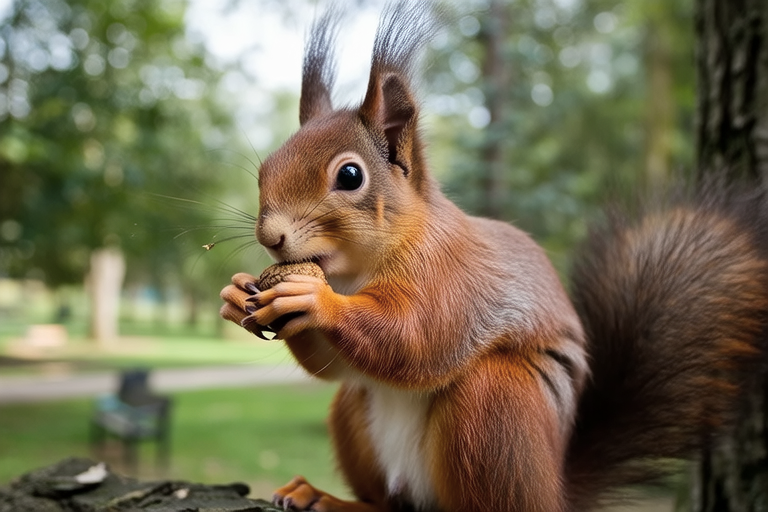
Urban Squirrels: Lesser-Known Facts and Adaptations
In the hustle and bustle of city life, it’s easy to overlook the small but significant creatures that have made their homes alongside us. Urban squirrels, particularly the Eastern Gray Squirrel (Sciurus carolinensis) and the Fox Squirrel (Sciurus niger), are among the most common sights in parks and gardens. These adaptable animals have thrived in human-dominated landscapes, showcasing remarkable intelligence, unique dietary habits, and intricate social structures. This article delves into some surprising and lesser-known facts about urban squirrels, highlighting their adaptability, dietary habits, communication methods, intelligence, and their impact on city ecosystems.
The Urban Jungle
Squirrels are often seen as mere nuisances, raiding bird feeders or digging up gardens. However, their presence in cities is a testament to their adaptability. They have learned to exploit human-made structures, using power lines, rooftops, and bridges as pathways. In many cases, squirrels thrive in urban areas due to the abundance of food sources, shelter, and the relative absence of predators.
Anecdotal evidence suggests that squirrels in urban settings are more likely to approach humans than their rural counterparts. This boldness is partly due to their familiarity with people and partly because they’ve learned that humans can be a source of food. Observations show that squirrels in busy city centers have adapted to the rhythm of city life, knowing when pedestrians are likely to toss them a snack.
Dietary Habits
Contrary to popular belief, squirrels don’t solely rely on nuts. Their diet is diverse and includes seeds, fruits, fungi, and even insects. In urban environments, they have expanded their menu to include human leftovers, such as discarded snacks and pet food. This flexibility allows them to survive in areas where natural food sources may be scarce.
One surprising fact is that squirrels are adept at finding and eating acorns, which are rich in nutrients but tough to crack open. They use their sharp incisors to gnaw through the hard shells, often carrying the acorns to hidden stashes called caches. These caches serve as emergency food supplies during lean times, demonstrating the squirrels’ forward-thinking nature.
Communication and Intelligence
Squirrels communicate through a variety of vocalizations and body language. They emit high-pitched chirps to alert others of potential threats or to signal mating readiness. Interestingly, squirrels can also distinguish between different types of predators based on their calls, responding more cautiously to those that pose a greater threat.
Studies have shown that squirrels are capable of problem-solving and even using tools. For instance, they’ve been observed bending wire to reach food inside cages or using leaves to cover their paws while handling sharp objects. Their ability to remember the locations of their caches and retrieve them later demonstrates impressive spatial memory and planning skills.
Impact on City Ecosystems
While squirrels are often viewed as pests, they play a crucial role in maintaining urban ecosystems. By burying seeds and nuts, they inadvertently help plant trees and other vegetation. This process, known as seed dispersal, contributes to the greening of cities and supports local biodiversity.
Squirrels also serve as prey for larger animals, such as hawks and foxes, helping to regulate predator populations. Additionally, their burrowing activities improve soil quality by aerating it and promoting nutrient cycling. This makes squirrels valuable members of urban ecosystems, despite their reputation as garden invaders.
Challenges in Urban Environments
Despite their adaptability, squirrels face several challenges in urban environments. One major issue is the prevalence of traffic accidents. Many squirrels are hit by cars as they cross busy roads, especially during peak feeding hours. Another challenge is competition for resources, particularly food and nesting sites. As urban areas expand, natural habitats shrink, forcing squirrels to compete with each other and other wildlife for limited resources.
Predation from domesticated animals, such as cats and dogs, also poses a threat to urban squirrels. In some cases, these pets are allowed to roam freely, increasing the risk of attacks on squirrels. Furthermore, the use of pesticides and herbicides in urban areas can harm squirrels by contaminating their food sources or directly affecting their health.
Coexisting Harmoniously
To ensure the well-being of urban squirrels and maintain a healthy balance in city ecosystems, it’s important for humans to coexist harmoniously with these animals. One way to achieve this is by providing safe spaces for squirrels to live and forage. Creating green spaces, such as community gardens and parks, offers squirrels access to natural habitats and reduces their reliance on human-provided food sources.
Another strategy is to manage outdoor trash and pet food to prevent attracting squirrels to dangerous areas. Securing garbage cans and feeding pets indoors can reduce the likelihood of conflicts between humans and squirrels. Additionally, installing barriers, such as fences or netting, around gardens and fruit trees can protect plants from being damaged by squirrels.
It’s also essential to educate the public about the importance of squirrels in urban ecosystems and encourage responsible pet ownership. By fostering a culture of respect and understanding towards urban wildlife, we can create safer and more sustainable environments for both humans and squirrels.
Conclusion
Urban squirrels are fascinating creatures that have adapted remarkably well to life in cities. Their intelligence, adaptability, and resourcefulness make them integral parts of urban ecosystems. While they face challenges in urban environments, there are steps we can take to coexist harmoniously with these animals. By understanding and appreciating the role of squirrels in our cities, we can help ensure their continued survival and contribute to the overall health of our urban environments.
