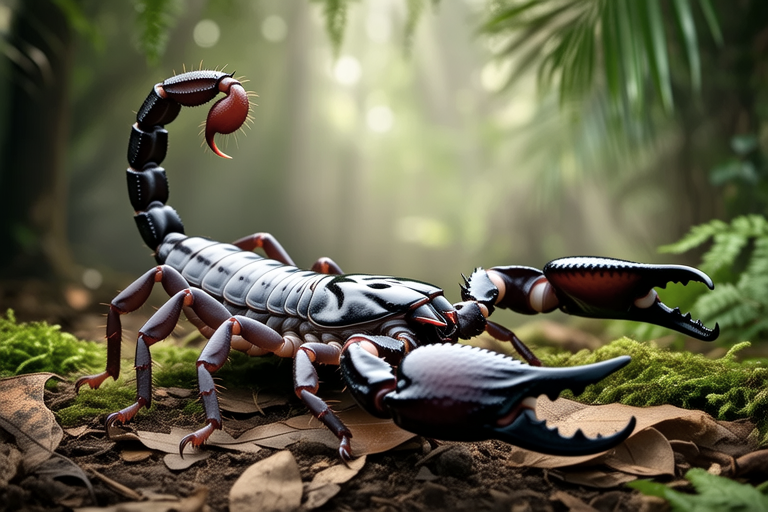
The Journey of Heterometrus Spinifer: From Jungle Floors to Pet Shops
Heterometrus spinifer, commonly known as the spiny forest scorpion, is a species native to the lush jungles of Southeast Asia. This fascinating creature has captured the imagination of many with its unique appearance and intriguing behavior. Let us delve into the life of this scorpion, from its natural habitat to its presence in the pet trade.
Natural Habitat and Environment
The Heterometrus spinifer thrives in the dense, humid environments of tropical rainforests. Found primarily in countries like Thailand, Malaysia, and Indonesia, these scorpions prefer areas rich in leaf litter and undergrowth. The jungle floor provides ample hiding spots, making it an ideal environment for this nocturnal predator.
Scientifically speaking, the Heterometrus spinifer belongs to the family Scorpionidae and is characterized by its distinctive spines along its tail and legs. These spines serve multiple purposes, acting as both defensive tools against predators and aids in capturing prey. Their natural diet consists mainly of insects, small vertebrates, and other arthropods found within the jungle ecosystem.
Dr. Sarah Lee, a renowned arachnologist, explains, “The spiny forest scorpion’s adaptability to its environment is truly remarkable. They have evolved to blend seamlessly into their surroundings, often mimicking the appearance of fallen leaves or twigs.” This camouflage helps them avoid detection by larger animals while also assisting in ambushing unsuspecting prey.
Behavior and Unique Survival Mechanisms
One of the most captivating aspects of the Heterometrus spinifer is its hunting technique. As a nocturnal hunter, it remains hidden during the day, emerging at night to search for food. Using its highly sensitive sensory organs, including chemoreceptors and touch-sensitive hairs, the scorpion can detect the slightest movements of potential prey.
When threatened, the Heterometrus spinifer employs several defense mechanisms. Its primary defense is the stinger located at the tip of its tail, which contains venom capable of immobilizing smaller animals. However, contrary to popular belief, the venom of the Heterometrus spinifer is generally not lethal to humans; it acts more as a deterrent rather than a means of attack.
Personal anecdotes from enthusiasts who have observed these scorpions in their natural habitats provide valuable insights. One such individual, John, shares, “I once watched a Heterometrus spinifer patiently wait for hours near a termite mound. When a termite finally ventured out, the scorpion pounced with incredible speed and precision.”
Transition to the Pet Trade
While the Heterometrus spinifer is well-adapted to its natural environment, it has also become a popular choice among exotic pet enthusiasts. The process of sourcing these scorpions for the pet trade involves careful consideration of ethical practices and responsible sourcing methods.
Many reputable breeders focus on captive breeding programs, ensuring that wild populations remain undisturbed. Captive breeding not only promotes conservation efforts but also provides a sustainable alternative to wild-caught specimens. These breeding programs often involve close collaboration between scientists, conservationists, and experienced hobbyists.
However, the pet trade does present challenges. Dr. Lee emphasizes, “It’s crucial for potential owners to research thoroughly before purchasing a Heterometrus spinifer. Understanding the specific needs of these animals is paramount to providing them with a healthy and stimulating environment.”
Care Requirements and Responsibilities
For those considering adopting a Heterometrus spinifer, understanding its care requirements is essential. A suitable enclosure should mimic the scorpion’s natural habitat, complete with substrate, hiding places, and appropriate temperature and humidity levels.
Temperature-wise, maintaining a range between 75°F and 85°F (24°C to 29°C) is ideal. Humidity should be kept around 60-80% to prevent dehydration. Substrate options include coconut fiber, soil, or a mix of both, allowing for easy burrowing and moisture retention.
Feeding is another critical aspect of care. Young scorpions require smaller prey items such as crickets, while adults can consume larger insects like locusts or dubia roaches. It’s important to ensure that the prey is appropriately sized to avoid overfeeding.
Regular handling is not recommended due to the scorpion’s defensive nature. However, with proper training and patience, some owners find that gentle interaction can be established. Always handle your scorpion with care, using gloves or tongs to minimize stress.
Expert advice from seasoned hobbyists can be invaluable. For instance, Sarah, a long-time enthusiast, suggests, “Investing in a good-quality heat lamp and hygrometer will greatly enhance your ability to maintain optimal conditions for your scorpion.”
Ethical Considerations
The ethical considerations surrounding the pet trade of Heterometrus spinifer cannot be overstated. Responsible sourcing ensures that wild populations are protected and that each animal’s welfare is prioritized. Supporting reputable breeders and organizations dedicated to conservation efforts is a step towards sustainable pet ownership.
Potential owners must also consider the long-term commitment involved. Scorpions can live up to 8 years in captivity, requiring consistent care and attention throughout their lives. Ensuring that you are prepared for this responsibility is crucial before bringing a Heterometrus spinifer into your home.
Conclusion
The journey of the Heterometrus spinifer from the jungle floor to the pet shop is a testament to the resilience and adaptability of these fascinating creatures. By understanding their natural habitat, behavior, and care requirements, we can ensure that they thrive in captivity while promoting ethical and responsible pet ownership.
As Dr. Lee concludes, “By appreciating the complexity and beauty of these animals, we not only enrich our own lives but also contribute to the preservation of biodiversity. It’s a win-win situation for both the scorpion and its keeper.”
