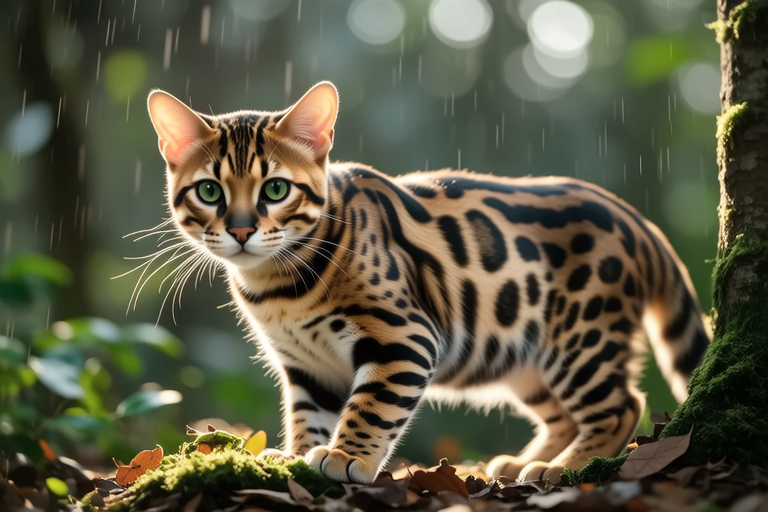
From Jungle to Couch: Discovering the Wild Spirit of Bengal Cats
Bengal cats have captured the hearts of many pet lovers with their striking appearance and unique personalities. These felines, known for their close resemblance to their wild ancestors, offer a fascinating glimpse into the world of domesticated wildlife. This article delves into the origins, history, physical attributes, temperament, and care of Bengal cats, providing a comprehensive guide for both enthusiasts and potential owners.
The Origins and Characteristics of Bengal Cats
The Bengal cat’s story begins in the lush jungles of Asia, where their wild ancestors, the Asian leopard cat (ALC), roamed freely. These small wildcats, native to regions including India, China, and Southeast Asia, are the foundation of the Bengal breed. The first documented crossbreeding between an ALC and a domestic cat occurred in the early 1960s, when Jean Mill, a breeder and conservationist, sought to create a domestic cat with the exotic beauty of the leopard cat. Her goal was to develop a cat that would retain the wildcat’s distinctive markings while being friendly and affectionate towards humans.
Bengal cats are renowned for their stunning coat patterns, which closely mimic those of their wild relatives. Their fur often features large spots or marbling, set against a background color ranging from light brown to golden. The most striking feature of their coat is the “glitter” effect, where individual hairs appear to sparkle under light, adding to their allure. Another notable characteristic is their almond-shaped eyes, which come in shades of green, gold, or blue, further enhancing their wild appearance. These physical traits not only make Bengal cats visually stunning but also serve as a testament to their genetic heritage.
The History of Breeding Bengal Cats
The journey of Bengal cats from the jungle to the living room is a remarkable one. Jean Mill’s initial efforts to breed the first generation of Bengals faced numerous challenges, including difficulties in finding suitable domestic partners for the ALCs. Over time, she refined her breeding program, selecting cats that displayed desirable traits such as health, temperament, and coat quality. By the late 1970s, the Bengal breed began to gain recognition within the cat fancy community, and in 1986, it was officially accepted by The International Cat Association (TICA).
Today, Bengal cats are the result of several generations of selective breeding, carefully balancing the traits of their wild ancestors with the gentle nature of domestic cats. The process has allowed breeders to produce cats that are not only beautiful but also well-suited for life in a home environment. As the popularity of Bengal cats has grown, so too has the availability of kittens, making them accessible to more cat lovers around the world.
Physical Attributes and Unique Traits
Beyond their striking coat patterns and eye shapes, Bengal cats possess several physical attributes that set them apart from other breeds. One of the most noticeable features is their muscular build, which gives them a sleek, athletic appearance. Their bodies are medium to large in size, with males typically weighing between 8 and 15 pounds and females between 6 and 12 pounds. This robust physique, combined with their agility and flexibility, makes them excellent climbers and jumpers.
Another unique trait of Bengal cats is their water-loving tendencies. Unlike many other cat breeds, Bengals enjoy playing in and near water, often splashing about in shallow pools or even attempting to bathe themselves in sinks or showers. This playful behavior is believed to be inherited from their wild ancestors, who may have needed to wade through water to hunt or escape predators. Additionally, Bengals are known for their vocalizations, which can range from chirps and trills to more complex sounds that resemble bird calls. This vocal repertoire adds another layer of charm to their already captivating presence.
Temperament and Behavior
Beyond their physical appearance, Bengal cats are celebrated for their engaging and affectionate personalities. While they retain some of the independence typical of wild animals, they are generally very social and enjoy interacting with their human companions. Bengals are known for their playful nature, often engaging in games that require both mental and physical stimulation. They are particularly fond of toys that encourage hunting behaviors, such as feather wands or laser pointers.
Despite their energetic demeanor, Bengal cats are also capable of forming strong bonds with their owners. They are affectionate and often seek out physical contact, curling up beside their humans or following them from room to room. However, their need for attention should not be mistaken for excessive clinginess; Bengals are still independent creatures who value their personal space. Owners should provide them with plenty of opportunities for exercise and play to ensure their physical and mental well-being.
Caring for and Bonding with Your Bengal Cat
For those considering adding a Bengal cat to their family, there are several important factors to consider when caring for and bonding with these magnificent creatures. First and foremost, Bengals require a stimulating environment that provides ample opportunities for exercise and exploration. This can include climbing structures, scratching posts, and interactive toys. Providing a variety of toys and activities will help keep your Bengal mentally engaged and physically active, reducing the likelihood of destructive behaviors.
Feeding a balanced diet is also crucial for maintaining your Bengal’s health. Bengals have high energy levels and require a diet rich in protein and nutrients. Consult with your veterinarian to determine the best food options for your cat based on its age, weight, and activity level. Regular veterinary check-ups are essential to monitor your Bengal’s health and address any potential issues before they become serious.
To foster a strong bond with your Bengal, spend quality time together each day. Engage in play sessions, provide affection, and offer verbal praise. Bengals thrive on positive reinforcement, and consistent interaction will help strengthen your relationship. It’s also important to establish clear boundaries and rules for your cat, ensuring that it understands what behaviors are acceptable and which ones are not. With patience, consistency, and love, you can create a harmonious home environment that allows your Bengal to thrive.
The Enduring Appeal of Bengal Cats
The enduring appeal of Bengal cats lies in their ability to bring a touch of the wild into our homes. Their striking appearance, playful personalities, and engaging behaviors make them beloved companions for many cat lovers. As we reflect on the journey of Bengal cats from the jungle to the couch, it becomes clear that their wild spirit is not diminished by domestication but rather celebrated and cherished.
For those fortunate enough to share their lives with a Bengal cat, the experience is one of joy and wonder. These majestic creatures offer a unique blend of beauty, intelligence, and affection, creating a bond that is both profound and lasting. Whether lounging on the sofa or chasing after a toy, Bengal cats bring a sense of excitement and adventure to every moment, reminding us of the wildness that exists within all living beings.
