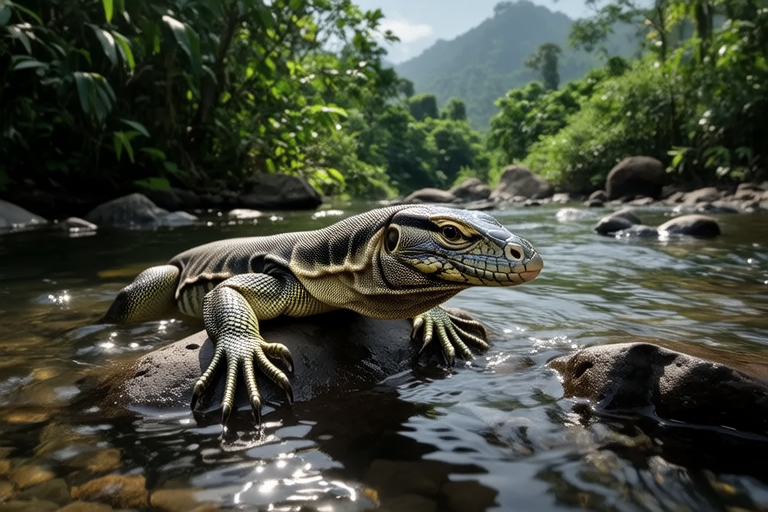
Unleashing the Secrets of the Water Monitor: Nature’s Aquatic Wonder
The water monitor (Varanus salvator) is a formidable reptile, renowned for its adaptability and prowess in both terrestrial and aquatic environments. Native to Southeast Asia, these lizards are a marvel of nature, embodying a blend of agility, intelligence, and strength that has allowed them to thrive in diverse habitats across their range. From dense jungles to swampy wetlands, the water monitor is a testament to evolutionary success.
Habitat and Diet
Water monitors inhabit a variety of ecosystems, including mangroves, forests, and grasslands. They are particularly adept at living near freshwater sources such as rivers, lakes, and swamps. Their ability to thrive in these areas is partly due to their omnivorous diet, which includes insects, fish, small mammals, birds, and even eggs. This dietary flexibility enables them to exploit different food sources depending on availability, making them resilient in the face of environmental changes.
Unique Adaptations for Aquatic Life
The water monitor is uniquely equipped for its dual lifestyle. Its streamlined body, powerful limbs, and muscular tail contribute to its impressive swimming abilities. The tail acts as both a propeller and rudder, allowing the lizard to navigate swiftly through water. Additionally, water monitors possess a valve-like structure that seals off the nostrils when submerged, enabling them to stay underwater for extended periods. This adaptation, combined with their keen sense of smell, makes them formidable hunters in aquatic environments.
Physical Characteristics
Water monitors are among the largest lizards in the world, with some individuals reaching lengths of over six feet and weighing up to 50 pounds. Their robust build is supported by strong, clawed limbs and a long, prehensile tail. The skin is tough and scaly, providing protection from predators and harsh environmental conditions. Males are generally larger than females and display more vibrant coloration, particularly during breeding season.
Behaviors and Ecosystem Role
Water monitors are highly social animals, often seen basking in groups or patrolling their territories. They are intelligent and curious, displaying problem-solving skills that have been observed in captivity. In the wild, they play a crucial role in maintaining ecological balance by controlling populations of smaller animals and contributing to nutrient cycling through their feeding habits.
Fascinating Facts
These lizards are not only physically imposing but also incredibly fast. On land, they can reach speeds of up to 18 miles per hour, making them one of the fastest lizards globally. Their hunting techniques are equally impressive; they are ambush predators, capable of lying in wait for prey or actively pursuing it with remarkable stealth and agility. When threatened, water monitors can release a foul-smelling musk from glands near their tails, deterring potential attackers.
Challenges and Conservation Efforts
Despite their resilience, water monitors face several threats, primarily due to human activities. Habitat destruction, deforestation, and pollution have severely impacted their natural habitats. Additionally, they are hunted for their skins, which are prized in the leather trade, and for their meat, which is considered a delicacy in certain regions. These pressures have led to significant population declines in many areas.
To address these issues, various conservation initiatives have been implemented. Protected areas have been established to safeguard critical habitats, and efforts are underway to promote sustainable practices among local communities. Education programs aim to raise awareness about the importance of preserving these lizards and their ecosystems.
The Importance of Understanding and Preserving the Water Monitor
Understanding and preserving the water monitor is essential for maintaining biodiversity. As keystone species, they influence the health and stability of ecosystems by regulating prey populations and contributing to nutrient cycles. Their presence serves as an indicator of environmental health, and their decline could have far-reaching consequences for other species and the overall balance of nature.
In conclusion, the water monitor is a remarkable creature, embodying the resilience and adaptability of life. By learning more about these fascinating reptiles and supporting conservation efforts, we can ensure that future generations will continue to marvel at the wonders of nature.
